The winds of Armenia
On April 13, 2018, Armenia changed its course. The Velvet Revolution brought Nikol Pashinyan to power, shifting the political direction toward a gradual reduction of Russian influence in the region. Since then, many things have changed, and many more are bound to change. This wind came from the inside.
Two years after his election, war broke out in Nagorno-Karabakh (Artsakh for the armenians), an inevitable explosion of long-simmering tensions that were merely waiting for a catalyst to ignite. It erupted in a flash and with extraordinary violence, sealing the tragic fate of Karabakh in just 44 days. The region was emptied of its population, forcing around 100,000 displaced people to flee toward Armenia. Military historians agree that this war was the first where the heavy use of drones decisively determined the outcome. This wind came from the East.
A few years later, the outbreak of the war in Ukraine became yet another conflict to deeply impact Armenia's fate, a country whose geographical and political position made it an ideal haven. This war triggered an influx of Russians and Ukrainian-Armenians who, over time, came to reshape the country's cultural and youth scene. Cultural clubs and bars began springing up across the capital, while an influx of artists and IT specialists arrived, further nourishing the country's already dense and thriving tech ecosystem. This new wind came from north-west.
Furthermore, Mount Ararat was removed from passport stamps and, whenever possible, from depictions of Khor Virap, the iconic monastery that overlooks the sacred mountain, reflecting a gradual effort to phase it out from public imagery almost everywhere, a direct consequence of Pashinyan’s policies of 'accommodation' and geopolitical re-alignment.
In addition to this, another threat looms from the south, generated by the tensions surrounding the Zangezur corridor, which is meant to connect Azerbaijan to Nakhchivan by passing through Armenian territory. This latest wind of instability completes the complex picture of challenges that the country is currently striving to resolve
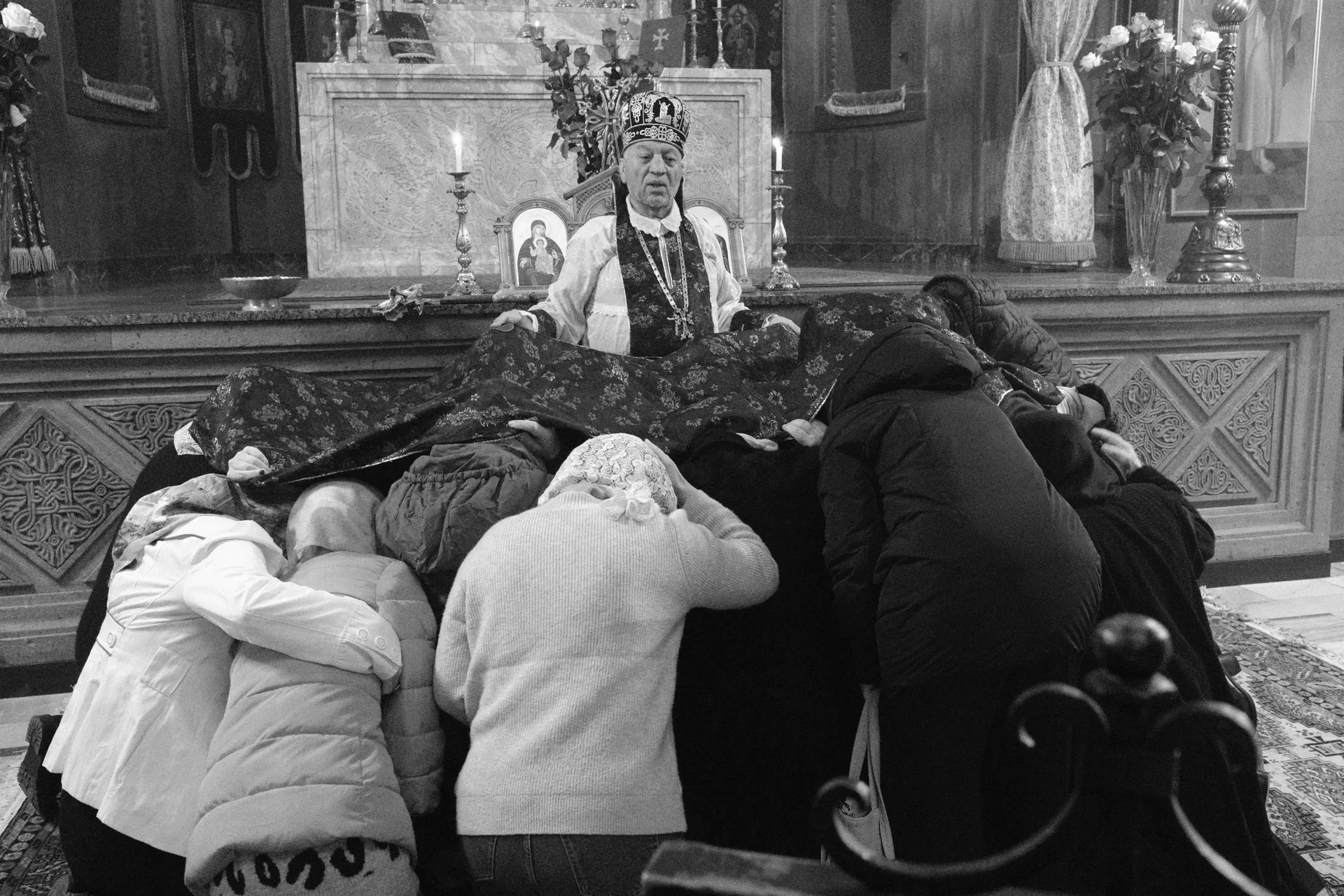
These "winds", fueled by an influx of war-driven immigration that has triggered a construction boom and sent inflation and prices soaring, combined with the foreign policy of his political entourage, are profoundly redefining the country's fate. Yet, the nation hardly seems to forget its deep-rooted ties to the Church and its traditional spirit, which remain strong and well-defined even among the younger generation. Nevertheless, there are visible signs of a turning toward new horizons.
I first encountered this country in 2019, and I have been watching it ever since, trying to capture the essential, meaningful elements of this subtle shift while moving between traditionalist and modern spheres.
Once again, despite all winds, one cannot speak of Armenia without passing over the bodies of its saints and heroes, to whom the country remains deeply attached.